
Greenland - A Scenario
I really hope this isn't what happens

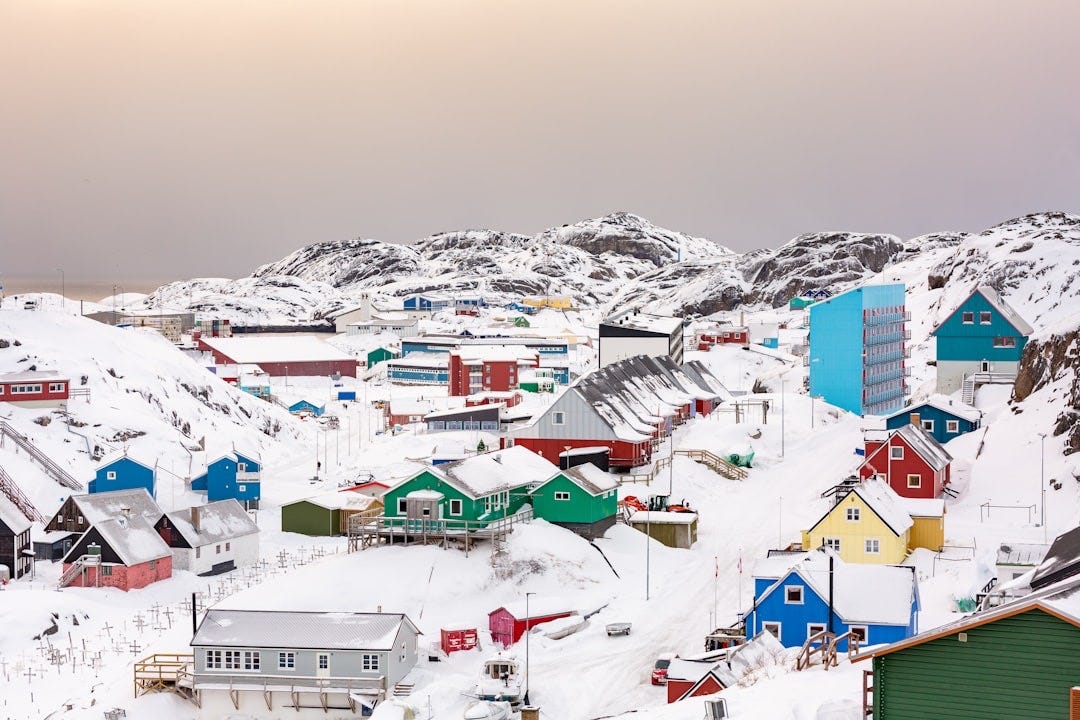
This is a longer version of my latest column for Kathimerini, imagining the consequences of a US intervention in Greenland. It was written before the latest extraordinary escalation in the stand-off between America and Europe following Donald Trump’s Truth Social post threatening tariffs on supporters of Denmark. My thanks to the editors at Kathimerini for allowing me to republish. I will send out my regular newsletter with further thoughts on this and other issues later today.
The moment when Vivian Motzfeldt realised that the game was almost certainly up came at a meeting with Vice President JD Vance and Secretary of State Marco Rubio, in Washington on January 14th, 2026. In an interview afterwards, Greenland’s Foreign Minister struggled to keep her composure as she recalled the stress of recent days. Standing alongside her in a press conference the day before, Lars Løkke Rasmussen, the Danish Foreign Minister, had admitted to “fundamental disagreements” with the Trump administration over its “wish to conquer” Greenland. A working group had been established to see if differences could be reconciled. He did not sound confident.
For the best part of a year, Denmark and Greenland had tried to respond to Trump’s repeated talk of annexation through diplomatic channels, seeking to avoid escalation. In January 2025, Copenhagen had refused an offer by France to send troops to the island as a gesture of solidarity, fearing it might provoke the US president. Copenhagen was in no doubt that Trump was serious, but hoped he could be deflected with offers to station whatever troops he wanted in Greenland and rights over the island’s minerals. But far from being swayed by these offers, the Trump administration had refused even to meet with Danish counterparts.
By the time the two sides finally met in Washington, it was already clear that this approach had failed. The first signs had come with the US National Security Strategy at the end of 2025, which did not mention Greenland by name but set out what Trump called the Donroe Doctrine. This claimed the whole of the Western Hemisphere to be a US sphere of interest and asserted a right to restrict access to America’s adversaries. What this meant in practice became apparent in the first days of 2026, when America attacked Venezuela, kidnapped its president, and appropriated its oil. In the afterglow of triumph at a stunningly successful military operation, Trump immediately made clear that high among his next targets was Greenland, which he claimed, without evidence or indeed any basis in reality, was at imminent risk of being occupied by China and Russia.
Even so, few even then believed that Trump would dare to launch a military attack to seize the territory of a loyal NATO ally militarily. As Trump and other administration officials ramped up their aggressive rhetoric in the wake of the Venezuelan operation, Denmark changed strategy, hoping to deter Trump with a more confrontational response. Prime Minister Mette Friedriksen warned that any attempt to seize Greenland would blow up Nato. Denmark deployed extra troops to Greenland and let it be known that they had a shoot first policy if they came under attack. Greenlanders themselves let it be known that they had no wish to be American and, faced with a choice, would rather stay with Denmark.
At the same time, Copenhagen tried to rally international support for its cause. European allies were asked to send forces to Greenland to send a signal that Europeans were prepared to fight to defend Danish sovereignty. Some did send token forces Britain, for example, sent a single naval officer - though they were at pains to point out that the threat that they were being sent to deter came from China and Russia rather than America. France took a more belligerent tone, warning America of possible reprisals if it chose to invade. At the same time, Denmark and Greenland pinned their hopes on traditional Atlanticist Republicans in Congress restraining Trump. As a last resort, they hoped that the US military would refuse to obey what many considered an illegal order.
Yet it was not enough.
