
The Trump Slump
Thoughts on where next for the oil price, Scott Bessent's latest efforts to avoid Treasury market price discovery, and why Britain is worst in class

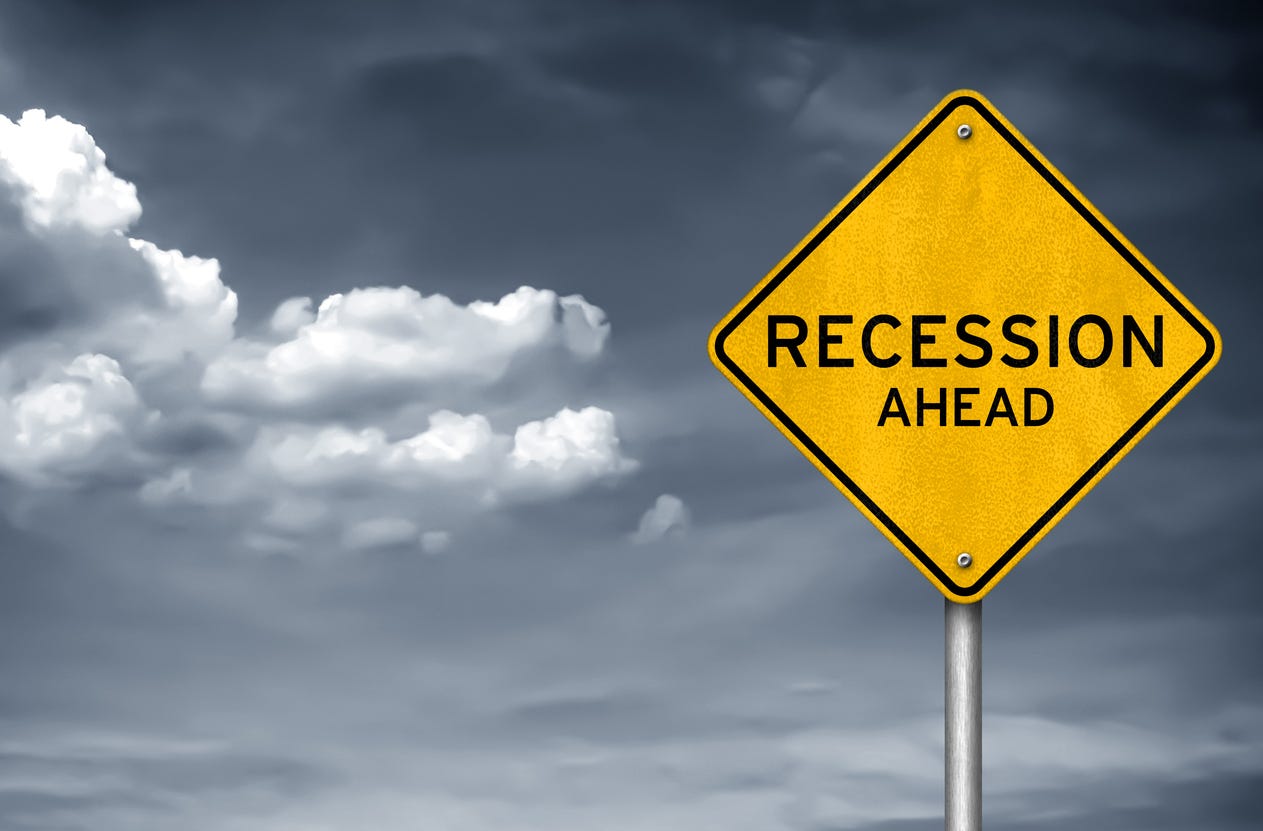
Here’s this week’s newsletter. Slightly shorter than usual after yesterday’s longer post on the future of UK-EU relations. I hope to publish a follow-up next week responding to some of the responses here and online. Please do read it if you haven’t already. There is a free 7-day trial for those who are not paid subscribers. Meanwhile many thanks to those who have taken out a paid subscription. If you find these posts helpful, please do consider joining them. At the very least, do hit the like button and forward it to anyone you think might be interested. I look forward as always to your comments and feedback. And please do email me if you have questions or ideas for future posts.
Trump’s Quagmire: The Jawbone War
UAE Bailout? Bessent’s Slush Fund
UK economy: Worst in Class
1. The Jawbone War
We’re now two months into the Iran War, past the 60-day point at which the Trump administration is supposed to seek Congressional approval to continue under the War Powers Act, and there is still no obvious way out of the quagmire. Last week, on the one hand, the WSJ reported that Trump administration has told aides to prepare for a long blockade of Iran and, on the other hand, Reuters reported that the administration has asked spy agencies to assess how Tehran would react to the US unilaterally declaring victory and withdrawing forces.
What is clear is that Trump is desperate for an exit strategy but is being prevented from executing a full TACO by Israel, which is insistent that he seize Iran’s stockpiles of enriched uranium and is still agitating for regime change, and the Gulf states whose economies he had wrecked and who are demanding he not withdraw until he has reopened the Strait of Hormuz. Iran, for its part, has no intention of giving up its control of Hormuz, from which Hugo Dixon, Reuters editor-at-large and occasional Wealth of Nations contributor, has estimated it may be able to extract up to $500 billion in tolls over the next four years.
Perhaps the best hope of a way out of this mess is that China can broker a deal when Trump meets with Xi Jinping in the summit scheduled for May 14-15. As Bill Emmott notes, Pakistan is currently acting as a mediator between Iran and America, but it is widely assumed that it is doing so on China’s behalf. The best outcome would be for China to take responsibility for securing Iran's enriched uranium stockpile and act as guarantor of its non-nuclear future.
Of course, such a deal would still leave open the question of Hormuz. For what it’s worth, my assumption has long been that Trump would be willing to walk away from Hormuz if he could get a nuclear deal, declaring that was for others to resolve. After all, that appeared to be the administration’s official position earlier in the conflict (see Pressure Index). That would be regarded as a big victory for Tehran and a disaster for the global rules-based order and the Gulf States who would find themselves at the mercy of Iran, as Trump’s spy agencies are no doubt advising him, so perhaps even this may be too difficult.
Much may depend on what happens in the markets. That’s why pretty much from the outset, Trump has seemingly devoted as much time to trying to manipulate the markets. The purpose of this manipulation - via endless social media posts and interviews in which Trump declares a deal to be at hand - is not just to generate profits for the Trump Syndicate, but to keep a lid on oil prices and prevent a broader market meltdown that might spill over into the real economy.
There were some signs that those efforts were starting to break down last week, with oil prices rising above $125 a barrel for the first time since 2022 as the markets started to realise that the two sides were still far apart. Indeed, some reckon that prices have much further to rise. The Economist, for example, thinks the oil markets are in la-la land and that prices may spike much higher:
Oil stocks will soon be at their lowest since satellite tracking began in 2018. Volumes of petrol, diesel and jet fuel at sea are already so low that gaps in supply will be inevitable. And in America petrol demand is about to surge, as the summer tempts people to get in their cars and drive.
To destroy sufficient demand to compensate for the loss of 14 million barrels a day via Hormuz, industry experts say the price of Brent crude would need to rise to double its pre-war level, at well over $150 a barrel. Yet the oil-futures market, in which speculators bet on where the oil price is going, says prices will fall every month for the rest of the year, ending 2026 at about $88.
Trump has bought himself time by talking the markets down. But you can't jawbone away 14 million barrels a day. When the gap between the futures curve and physical reality closes — and it will — the pressure for an exit deal, on whatever terms are available, may become hard to resist.
Sponsor content from Axa XL

The future of global investment depends on managing political risk. Are you ready?
Political Risk, Credit & Bond insurance may be little known, but it plays a critical role in enabling investment, trade and infrastructure development across the world.
In this piece, Rafael Docavo-Malvezzi from AXA XL explains how this market supports projects that improve energy access, water security and housing, and why managing geopolitical risk is key to driving sustainable growth.
Read the article - click link:

2. Bessent’s Slush Fund
Meanwhile, the oil price may not be the only market that the Trump administration is trying to manipulate. There was much excitement last week at Abu Dhabi’s decision to quit the OPEC oil cartel. This was almost entirely discussed in the context of the Emirate’s frustration with its OPEC quota and its growing rift with Saudi Arabia, with whom it has found itself on the opposite side of a number regional conflicts including those in Sudan and Yemen. The expectation is that it could lead to lower oil prices once the Iran war is over and signals a strengthening alliance between the UAE and the US and Israel.
No doubt all this is true. But there is another dimension to the Gulf/US relationship that has been somewhat less discussed: that is the request by the UAE to the US for a swap line as a financial backstop in case the Iran war plunges the oil-rich Persian Gulf state into a deeper crisis. This would provide the UAE central bank with access to dollars to support its currency or shore up its foreign reserves in case of a liquidity crisis.
Quite a lot of things were, and remain, odd about this story, not least that the UAE should be requesting a financial lifeline at all, given that it is one of the richest countries on the planet: it has at least US$2 trillion in assets held in three large sovereign wealth funds while the Central Bank of the UAE had $298bn in official reserves as of February, including $146bn in cash equivalents. That ought to guarantee it plentiful access to dollars if it needed them.
Also odd was the fact that Abu Dhabi’s request leaked at all. As one former central banker said to me, what if the answer had been ‘no’? Equally odd was that the original WSJ story breaking the news reported that the UAE had warned the US Treasury that it would switch to using Chinese yuan for oil sales and other transactions if it ran out of dollars - an implicit threat to the US dollar. That’s pretty remarkable: if the UAE — one of America's closest Gulf partners — is willing to use dollar abandonment as a negotiating lever, it tells you something about how far the dollar's gravitational pull has weakened even among US allies.
Meanwhile, the case for the US giving the UAE a swap line is actually pretty threadbare, as Brad Setser and Stephen Paduano noted for Alphaville. Usually, swap lines are provided by the Federal Reserve to major counterparties who might pose a financial stability risk to the US. But the UAE wouldn’t qualify on those grounds and, in any case, given its opaque financial dealings, there is a risk that an unconditional swap line would simply end up funding a backdoor bailout of the investment vehicles of the Emirati royals. “This is a financial and political risk the Federal Reserve cannot afford to take.”
But not too big a risk, it seems, for the US Treasury, which looks poised to provide the swap line from its own Emergency Stabilisation Fund, a much more limited pot of money under the control of Treasury Secretary Scott Bessent. This is not the first time Bessent has raided the ESF for political purposes: he used it to give Milei a short-term fix ahead of Argentina's mid-terms. A UAE swap line would confirm the ESF as Bessent's political slush fund of choice. As Charles Gave at GaveKal notes, the goal is to prevent the UAE from selling US bonds and thus pushing up US bond yields ahead of the mid-term elections.
Bessent’s eagerness to help the UAE is understandable when one considers some of the wider shifts taking place in the US Treasury market. The most striking is the dramatic reduction of the dollar in the share of global central bank reserves which has fallen from over 60% in the 1990s to just 40%, while gold’s share has tripled from its lows to 30% today. Indeed, as Torsten Slok at Apollo notes, for the first time, foreign private investors hold more US Treasuries than foreign central banks: “This is a structural shift that makes the Treasury market increasingly sensitive to the return expectations of price-sensitive private capital.”
No wonder Bessent is engaging in ever more unorthodox measures to try to hold US Treasury yields down even as government deficits balloon in response to the Iran war. That has included concentrating ever more debt issuance at the short-end of the curve which is less market sensitive and now apparently contemplating swap lines for the UAE. He may succeed in manipulating rates this way for now, but at the risk of building up risks for the future. As Gave says, “eventually, the US bond market and the US dollar will break down.”
At some point the gap between managed perception and physical reality will surely close — in oil markets and bond markets alike.
3. Worst in Class
Regardless of whether and how long Trump and Bessent succeed in manipulating markets, the longer the war goes on, the greater the economic damage - as all the major central banks noted in their interest rate announcements last week. With inflation picking up everywhere, the Bank of England and European Central Bank signalled imminent rate rises, the Fed signalled no more rate cuts, and the Bank of Japan intervened in foreign exchange markets after the Yen sank to its lowest on record against the dollar amid investor fears it would be too slow to raise rates.
But as NIESR pointed out last week in its latest quarterly forecast, it is Britain that is likely to be the worst impacted of the major economies. On the think-tank’s baseline scenario, the UK is expected to suffer the biggest shock to GDP growth and inflation among G7 countries. UK GDP would grow by 0.9 percent in 2026, compared to 1.4 percent in its February forecast, while inflation would peak at 4.1 percent early next year. That reflects in large part the UK’s particular vulnerability to higher energy prices given its heavy reliance on gas for heating, the lack of gas storage facilities, and electricity prices being tied to gas prices.
Things look even worse for Britain under NIESR’s adverse scenario, whereby oil (and gas) prices rise to $140 per barrel and then remain higher for longer. Under those circumstances, global growth would slow to its lowest level since 2009, other than during the Covid-hit 2020. Under those circumstances, Britain would slide into recession, while inflation would hit 5 percent later this year.
All of this will pose a deep headache for the chancellor, throwing her fiscal forecasts into disarray and forcing her to confront horrendous choices later this year. As NIESR says, the deeper fiscal concern is debt sustainability:
The debt dynamics are unfavourable, with interest costs on government debt exceeding the growth rate of the economy. That means the UK needs to be running primary surpluses to prevent the debt-to-GDP ratio from rising further. The UK has not run a primary surplus since 2001, and achieving the surpluses needed to bring debt onto a genuinely declining path will require difficult choices at the Autumn Budget. In our adverse scenario, with Bank Rate rising significantly and growth weaker, the debt ratio would rise further, the interest-rate-growth differential would widen, and the risk of a debt ratchet becomes increasingly acute.
All of this comes against a backdrop of local elections due this week in which the Labour party is expected to face annihilation and with the political and media class once again indulging one of their regular orgies of leadership speculation. Every day brings new headlines of allies of this or that supposed candidate who anonymously brief that they have enough supporters to challenge Sir Keir Starmer for the leadership. Meanwhile, as if to underline the stakes, 10-year gilt yields last week rose above 5 percent and closed on Friday at 4.97 percent.
Obviously, I risk being left to look very foolish next week but no matter how bad Labour’s performance, nor how hopeless a prime minister the press and public have made up their minds Starmer to be, I would be very surprised if an effort was made to oust him this week. I would be even more alarmed.
One only has to look at the ludicrous proposal of Andy Burnham - the Mayor of Greater Manchester who seems to have been anointed as frontrunner to succeed Starmer despite not having a seat in parliament - to exclude defence spending from the fiscal rules to know that any election would quickly descend into a left-wing fantasy spending contest. Almost certainly, the bond markets would get to vote before party members do and it won’t go well for Labour.
Indeed, all Britain’s political parties are currently indulging in fantasy economics, unwilling and unable to face up to the dire predicament the country faces. None have a realistic model for how Britain should earn its living in a rapidly changing and fragmenting world. There is no realistic path to fiscal sustainability, energy security, or economic growth that does not begin with a fundamental reset of Britain's relationship with Europe. That remains the one thing pretty much the entire political class — left, right, and centre — refuses to say out loud (see The Overwhelming Case for Rejoin).
The political class is 'indulging in fantasy economics' - sums it all up! and (as I just wrote on your previous post) the UK is badly adrift and ..rapidly sinking. I'll spell it out -it needs someone like you, if not you, to point out the Emperor's new clothes and.. bring the UK back into line!
Israel (and Saudi Arabia) talked Trump into attacking Iran. But it is rather a stretch to say the Israelis are “stopping Trump from exiting”. Trump’s paralysis runs far deeper and darker than that. He cannot admit to himself that he dragged the US into the worst strategic defeat in its history, just as he cannot admit that he lost the 2020 election. Netanyahu may be nefarious, but he is not Rasputin.